

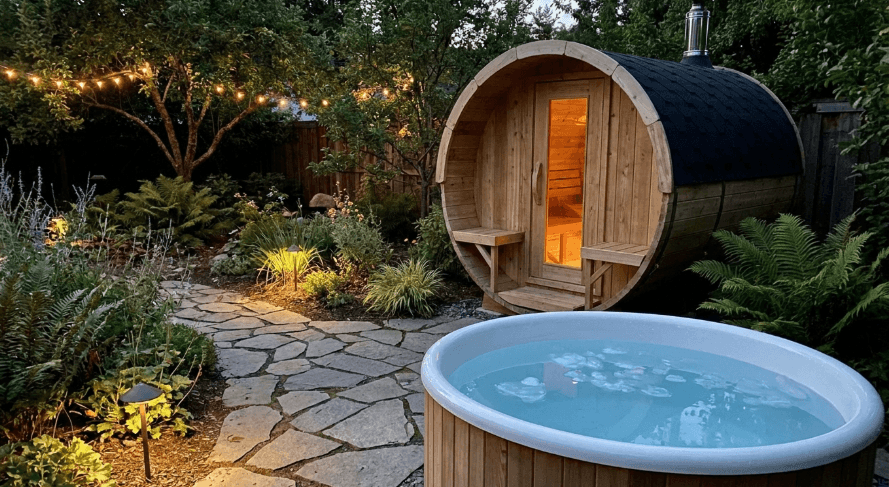
For two people using a sauna every day, the setup that holds up best is a cabin with roughly 4 by 6 feet of interior space, or a 6-foot diameter barrel, a heater sized toward the upper end of the recommended kilowatt range for that cubic footage, and a two-tier bench so each person can pick their own heat level. Anything smaller starts to feel cramped after the first few months of daily use, and an undersized heater shows its limits fastest under a routine rather than occasional schedule.
How Much Space Do Two Daily Users Actually Need?
A single-tier bench built for two often looks fine in a showroom photo but feels tight once two adults are actually sitting side by side every day, particularly if either person wants to lie down during a longer session. A cabin around 4 by 6 feet of interior floor space, or a barrel in the 6-foot diameter range, generally gives enough room for two people to sit comfortably or for one to lie down while the other sits, without the elbow-to-elbow feel a smaller two-person unit produces once the daily habit is a few weeks old rather than a one-time novelty.
What Heater Capacity Actually Handles Two People Every Day?
Sizing charts for a room in the 150 to 250 cubic foot range, which covers most two-person cabins and barrels, typically land in the 4.5 to 6 kilowatt class. For occasional weekend use, the lower end of that range works fine. For two people using the sauna daily, the heater is putting in meaningfully more cumulative hours over a year, so sizing toward the upper end of the range, and checking the duty-cycle rating rather than just the kilowatt number, holds up better over time than choosing the cheapest unit that technically fits the room.
Bench Layout for Two People, Not Just Square Footage
A two-tier bench is worth the extra cost for a couple using a sauna daily, since heat rises and the upper bench runs noticeably hotter than the lower one in the same room. That lets each person settle into their own preferred intensity instead of negotiating a single temperature every session, which becomes a real point of friction over months of daily use if one person consistently wants it hotter than the other. A lower bench wide enough to lie down on also matters for anyone who wants to stretch out during a longer session rather than sitting upright the entire time.
Traditional or Infrared for a Two-Person Daily Habit?
Either works, and the better fit depends on preference more than performance for this use case. A traditional two-person cabin or barrel delivers the higher-heat, higher-humidity experience many longtime users prefer, typically running 150 to 190 degrees Fahrenheit, and generally needs a dedicated 240-volt circuit. A two-person infrared cabin runs cooler, often 120 to 150 degrees, warms up faster session to session, and commonly plugs into a standard 120-volt outlet, which some daily users value simply because it shaves several minutes off the routine every single day. Neither format is a wrong choice for two people using it daily; they are different heat experiences with different electrical requirements.
Where to Put It So the Daily Habit Actually Sticks
Placement affects whether a daily habit for two people actually survives past the first month more than most buyers expect. A unit tucked far from the house, requiring a walk across an uneven yard in the dark after work, tends to get used less consistently than one placed close to a door with a clear, easy path. Comparing barrel and cabin dimensions against the actual available spot near the house, including the current lineup from the team at SweatDecks alongside other specialty retailers, is worth doing before ordering, since a unit that looks great on paper but sits too far from the house often ends up used a few times a week instead of the daily habit it was bought for.
What Durability Looks Like After a Year of Daily Sessions
Daily use by two people puts real, sustained wear on a sauna that occasional weekend use does not. Kiln-dried cedar or heat-treated softwood paneling, a continuous taped vapor barrier behind it, and a heater with headroom in its duty cycle are what separate a unit that still looks and performs well after a year of daily sessions from one that starts showing warped boards or a heater running flat out on every single use. Exterior wood on a barrel or cabin benefits from a sealant reapplied every couple of years, more often in a harsh climate, but a well-built unit otherwise needs surprisingly little beyond that for years of consistent daily use.
Scheduling Two People Around One Daily Sauna
A single-cabin setup for two people works best with a routine, not a free-for-all. Some couples use it together every session, which is part of the appeal for two-person sizing in the first place. Others end up on staggered schedules, one person after work and the other later in the evening, in which case the heater’s recovery time between back-to-back sessions matters as much as its initial warm-up time. A heater sized with headroom handles a second warm-up shortly after the first far better than one already running near its limit for a single session, which is one more reason not to size to the bare minimum for a household actually using the sauna daily.
What the Research Says About a Two-Person Daily Habit
The available research on regular sauna bathing, including a 2018 review in Mayo Clinic Proceedings and a 2001 review in The American Journal of Medicine, describes favorable health associations tied to frequent, habitual use in the populations studied, generally landing in the range that daily use for two people falls into. It is population-level association, not a guarantee for any specific household, but it does support the basic idea behind this setup: a sauna built to be used every day, comfortably, by two people, rather than one sized only for occasional use.
Frequently Asked Questions
What size sauna is right for two people using it every day? A cabin with roughly 4 by 6 feet of interior space, or a 6-foot diameter barrel, generally gives enough bench room without a cramped feel.
Does a two-person daily-use sauna need a bigger heater than an occasional-use one? Not necessarily bigger for the room size, but it should sit toward the upper end of the recommended kilowatt range given the extra cumulative hours.
Is a two-tier bench layout worth it for daily use by two people? Often yes, since it lets each person choose their own heat level rather than negotiating one temperature every session.
How long does a daily-use sauna typically last before major upkeep is needed? A well-built unit generally holds up for many years of daily use, with routine upkeep like resealing exterior wood rather than major repairs.
References
- Cardiovascular and Other Health Benefits of Sauna Bathing: A Review of the Evidence, Mayo Clinic Proceedings, 2018
- Benefits and risks of sauna bathing, The American Journal of Medicine, 2001
- Clinical Effects of Regular Dry Sauna Bathing: A Systematic Review, Evidence-Based Complementary and Alternative Medicine, 2018
